

I don’t have a deep or technical understanding of music, but Eric Clapton was one of those artists who simply existed around us while growing up evergreen, familiar, always there with songs like “Wonderful Tonight” and “Tears in Heaven.”
When I picked up his autobiography, I didn’t know what to expect. What I found was a life told with brutal honesty, vulnerability, and a surprising amount of tenderness.
Rose The Grandmother Who Became Mother
Clapton was raised not by his mother, but by his grandparents, Rose and Jack Clapp. Rose, strong, brave, and quietly unconventional shaped his early world.
There’s a little anecdote that stayed with me:
When she found a packet of cigarettes in his pocket, she didn’t scold him. Instead, she challenged him: “If you want to smoke, then smoke it properly.” He did, became violently ill, and didn’t try again until he was twenty-one.
Music also entered his life early through the village musician who played the piano accordion outside their home, and through Rose herself, who loved the piano. Those moments, simple and unremarkable at the time, became the quiet beginnings of his relationship with music.
Cream The Supergroup With a Name to Match
In 1966, Clapton joined forces with Jack Bruce and Ginger Baker to form Cream, one of the first true rock “supergroups.” Each was already regarded as one of the best in their field, so Clapton suggested the name Cream because they were, simply, the “cream of the crop.”
Their sound, a mix of blues, rock, and psychedelic improvisation, would influence generations of musicians.
The Fillmore Nights Playing Until Dawn
Clapton writes vividly about playing at the Fillmore Auditorium in San Francisco, where swirling psychedelic light shows were projected over the stage. Because the audience couldn’t actually see the musicians, there was no concern for presentation or showmanship.
They played freely, fearlessly, and sometimes until dawn. For Clapton, these nights were creatively transformative liberating in a way only true improvisation can be.
Hurtwood Edge The House That Held His Life
Later, Clapton found a home that would become central to his story: Hurtwood Edge, a house in Surrey.
It became the setting for friendships, romances, heartbreaks, fresh starts, music, and collapses. In his autobiography, the house becomes almost symbolic, a place where many of his life’s important threads began and ended.
Pattie Boyd The Muse and the Complication
Clapton fell deeply in love with Pattie Boyd, who at the time was married to George Harrison. Pattie had no intention of leaving George, and much of Clapton’s emotional turmoil poured into his music.
The iconic “Layla” was written for her raw, pleading, and desperate. Many other songs from that period carry traces of the complicated triangle they found themselves in. Eventually, Pattie and Clapton did marry, though their relationship was far from easy.
Addiction, Darkness, Humour, and a Turning Point
Clapton writes with startling openness about his battles with:
• heroin addiction in the early 1970s
• severe alcoholism
• multiple relapses and recoveries
There is one strangely humorous moment that becomes a turning point. He found his beloved green thermal underwear, put it on, wandered around in a drunken haze, and eventually passed out in the cellar. When found, he looked, in his words, like “Kermit the Frog,” with torches shining on him.
Moments like that forced him to recognise how far he had fallen.
He eventually committed to recovery fully and even founded the Crossroads Centre in Antigua in 1998 a rehabilitation facility meant to help others facing the same battles.
The First Summer of Sobriety
Clapton writes beautifully about the serenity that fishing brought him during his early recovery. It was meditative, calming, and deeply grounding something with a Zen-like quality that helped rebuild him from within.
Melia A Steadying Presence
His relationship with Melia McEnery marked a shift. Their age difference didn’t seem to matter because the essentials were right; friendship, steadiness, and a quiet kind of love. For Clapton, it felt like his first truly healthy choice in a partner. They married in 2002 and built a family together.
Clapton Is God The Music Behind the Man
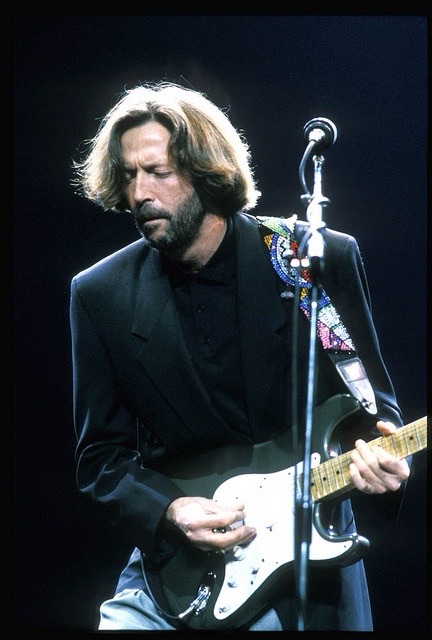
For all the darkness, Clapton’s musical journey is extraordinary. He played with the greatest musicians of his time, shaped guitar history, and poured his soul every fracture and healing into his art.
As I write this, listening to Journeyman, I’m reminded of that famous graffiti once seen around London:
“Clapton is God.”
And then the words of his own song drift in:
Lately I’ve been running on faith
What else can a poor boy do?
But my world will be right
When love comes over you.
Leave a Reply