
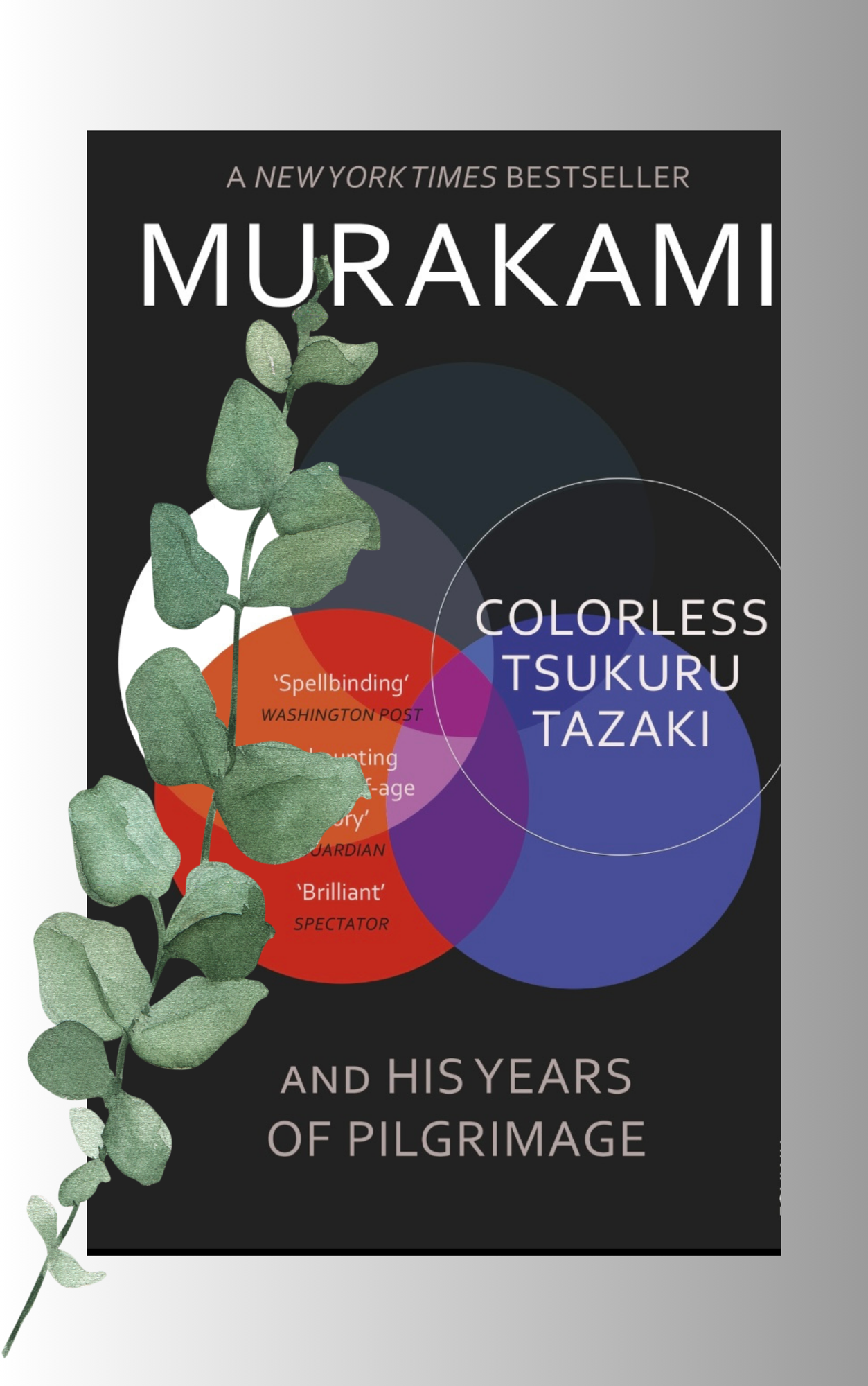
When I read Haruki Murakami’s Colorless Tsukuru Tazaki and His Years of Pilgrimage, I was captivated by the deep sense of suspense woven throughout the story. At one point, I simply couldn’t put the book down because I was desperate to uncover what had happened to Shiro. Yet, even as I turned the final page, the story left me with an unresolved feeling—almost as if it mirrored the emotional complexities of life itself.

Tsukuru
What stayed with me most, however, was the character of Tsukuru Tazaki. His persistent belief that he was “colorless”—lacking value or anything meaningful to offer—felt profoundly relatable. Tsukuru saw himself as someone who didn’t stand out, someone others overlooked. This struck a chord with me, as I often feel the same way in social situations, especially when I struggle to hold a conversation or feel I’m too bland to leave an impression. For those who truly know me, connection involves mutual effort—a kind of give and take that helps me feel seen.

Ordinary
Tsukuru spent much of his life convinced he was ordinary, yet his actions revealed otherwise. He built railway stations, spaces that connected people and made their journeys smoother. Among his friends, he was the quiet but essential presence that gave the group its balance and comfort. What held him back from recognizing his own worth wasn’t a lack of color—it was the unresolved pain and bitterness he carried. His journey was about seeking closure, releasing the weight of those unresolved issues, and understanding that his so-called “colorlessness” was never real.

Never Colorless
This realization resonated deeply with me. We often need to confront the conflicts within our hearts and minds to unlock our unique spark and share it with the world. Murakami’s novel reminded me that we all have our own color, even if it feels faint or transparent at times. The important thing is to recognize it, embrace it, and let it shine.
While the suspense of the story initially pulled me in, I now see that at its core, this novel is about healing broken relationships, confronting inner struggles, and finding closure to move forward. It teaches us that we’re never truly “colorless,” no matter what our inner voice may tell us.
Leave a Reply